Project Pulsar · Spatial video · 2024
Defining Adobe's spatial video editor before designs existed
Laying the groundwork with product research from a blank canvas, in headset.
- Role
- One of the first designers (graduate intern), XR domain expert
- When
- Summer 2024
- Platform
- Researched on Apple Vision Pro; launched on Samsung Galaxy XR
- Status
- Launched October 2025
Overview
Project Pulsar is Adobe's spatial FX and 3D compositing app for the Samsung Galaxy XR headset. Creators add studio-quality 3D text, assets and effects to their videos, with no VFX experience required.
I joined in summer 2024 as one of the first designers and XR domain expert, when Pulsar was only an idea and a goal statement. During that graduate internship, I mapped the market, storyboarded the first customer journey and tested gestures hands-on in headsets.
Impact
Direction
Mapped 15+ spatial tools to find Pulsar's position
Four audited in depth, laying the groundwork for the product strategy that followed.
Buy-in
Won leadership backing before any designs existed
I presented the first customer journey to Adobe's chief strategy officer and incubation board. Their backing let us move forward with the Android XR team.
Handoff
Handed off guidance to test
I wrote ergonomics guidance on fatigue, motion sickness and session length for the team to validate in the MVP.
Launch
Laid the foundation for a launch app
Pulsar shipped as one of the first apps on Samsung Galaxy XR, built on the groundwork from my internship.
The problem
Creators could film spatial video, but 3D effects took VFX skills.
Effects such as placing 3D text behind a person in the shot meant masking frame by frame in pro tools. Pulsar was meant to bridge 2D and 3D, so anyone could add 3D effects to everyday video.
Market research
Mapping the XR landscape to find Pulsar's market position
I reviewed more than 15 spatial creation tools, from game engines to AI-to-3D generators and XR prototyping apps, and grouped them by strategy. I then audited four in depth: who each targets, its pros and cons, and a breakdown of its interface for the team. Weighing them showed where Pulsar could win.
Alignment
Storyboarding the first customer journey to align leadership
The team had one persona and one open question: what should this app do? I storyboarded the user's journey from capture to audience in Adobe's own tools, keeping capture on a phone because my research showed not every creator has a headset.
Adobe's chief strategy officer and incubation board backed the direction, not a final design, and we moved forward with the Android XR team. The launched app works differently, but the story gave us a shared starting point.
- Frame 1
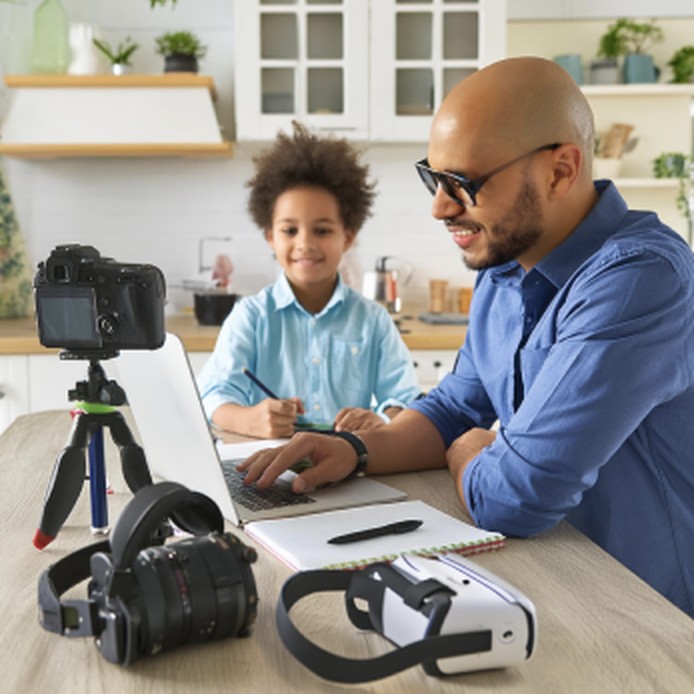
Capture
A family YouTuber wants an immersive video of the solar eclipse of the decade.
- Frame 2
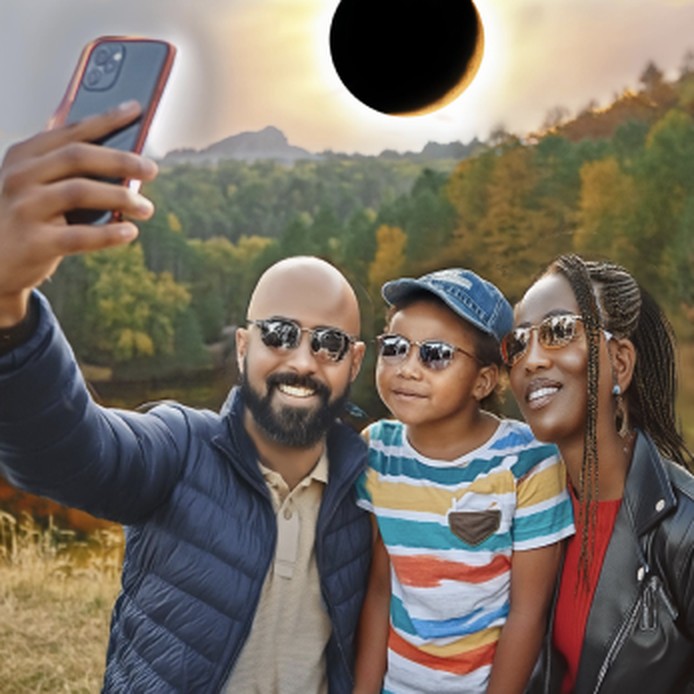
Capture
He travels to Little Rock and records the trip in spatial video using an iPhone 15 Pro and a camcorder.
- Frame 3
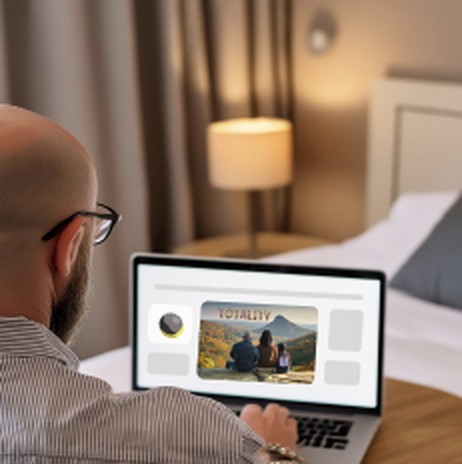
Create
At the hotel, he rough-cuts on his laptop and builds out the experience with Pulsar, Neo and Firefly.
- Frame 4
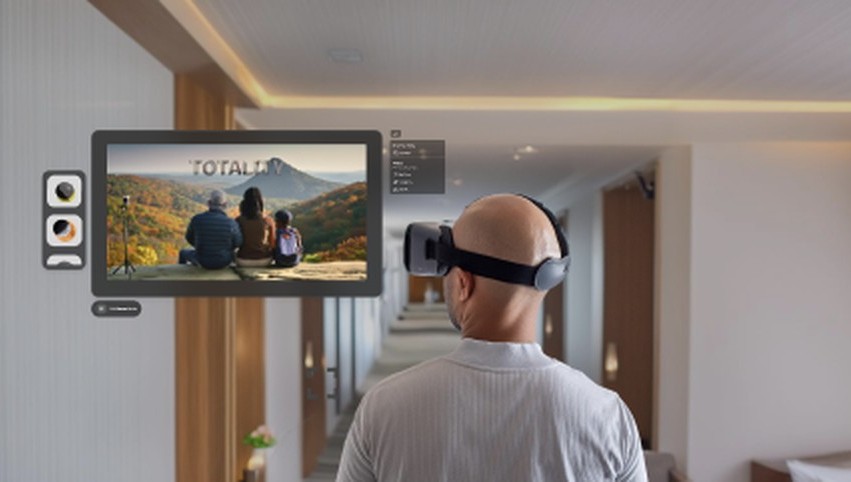
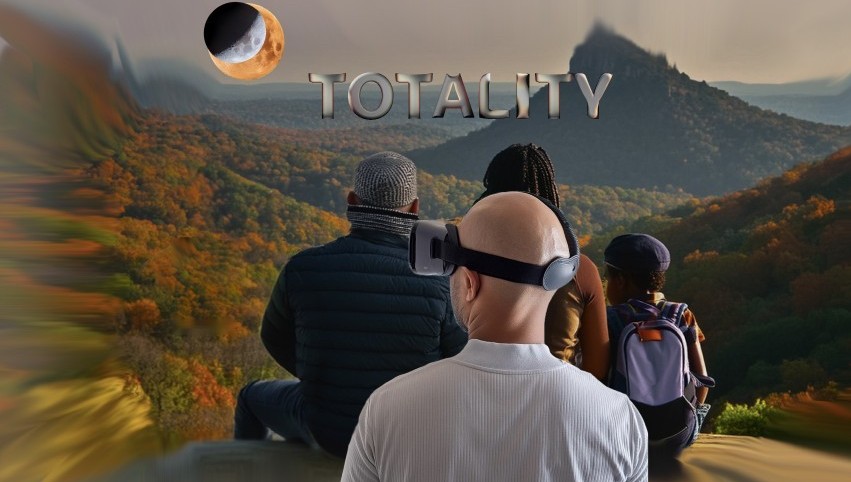
Refine
In the headset he adjusts the 3D content in place and checks how the scene feels at full immersion.
- Frame 5
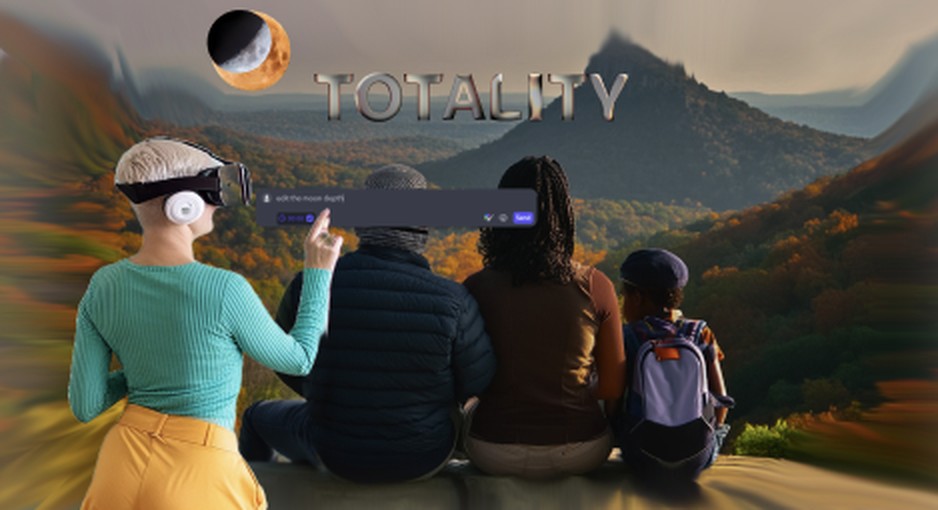
Share
He shares the project so his editor can review, approve and schedule it.
- Frame 6

Share
His audience finds it through Adobe's discovery page and watches on the YouTube app.
- Frame 7
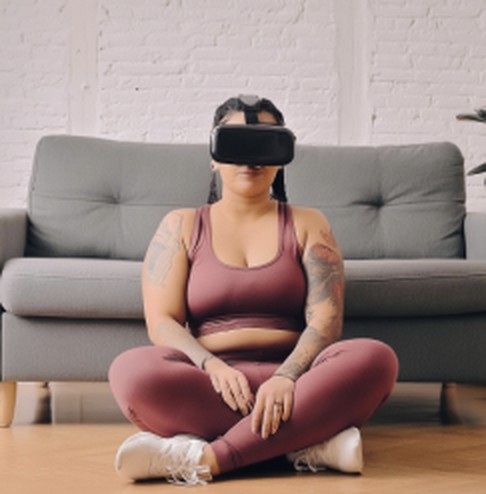
Share
Another viewer uses her headset to step into the immersive video and feel part of the moment of totality.
Trade-offs
Constraint
No Galaxy XR to test on
It was still a prototype, so I stood in with Apple Vision Pro as the benchmark, plus Quest Pro, Quest 3, HoloLens 2 and Magic Leap.
Web or headset
Wider audience or spatial focus
I weighed the options using internal research and product strategy analysis, then shared the trade-offs with the team.
Push-back
Your body is the hardware
Hours of editing means hours of gestures, and fatigue follows. I wrote guidance on how gestures shape the UI and why spatial UX means designing for the whole room, not a screen (Designing for the body).
Outcome
Pulsar launched with Samsung Galaxy XR. Samsung and Google showed it at the launch event, and it comes with the headset's Explorer Pack.
Project Pulsar on Google Play ↗
As seen in
Built with
The storyboard was made entirely with Adobe tools, and the research was done hands-on in five headsets.
Design
- Figma
- Photoshop
- Adobe Express
Generative
- Adobe Firefly
- Project Neo
Tested with
- Apple Vision Pro
- Meta Quest 3
- Meta Quest Pro
- HoloLens 2
- Magic Leap
Methods
- Competitive audits
- Storyboarding
- Hands-on gesture testing
- XR ergonomics guidance
© 2026 Faith Gowen. All rights reserved.